

Live CE Training at a Glance
Format: Live, interactive webinar; self-study link sent to those unable to attend live
Length: 1.5 instructional hours
CE Credit: 1.5 APA & NBCC CEs
Instructional Level: Intermediate
Target Audience: Licensed mental health professionals and graduate/doctoral-level clinicians
Presenter: Dr. Emily King, Ph.D.
What This Training Covers
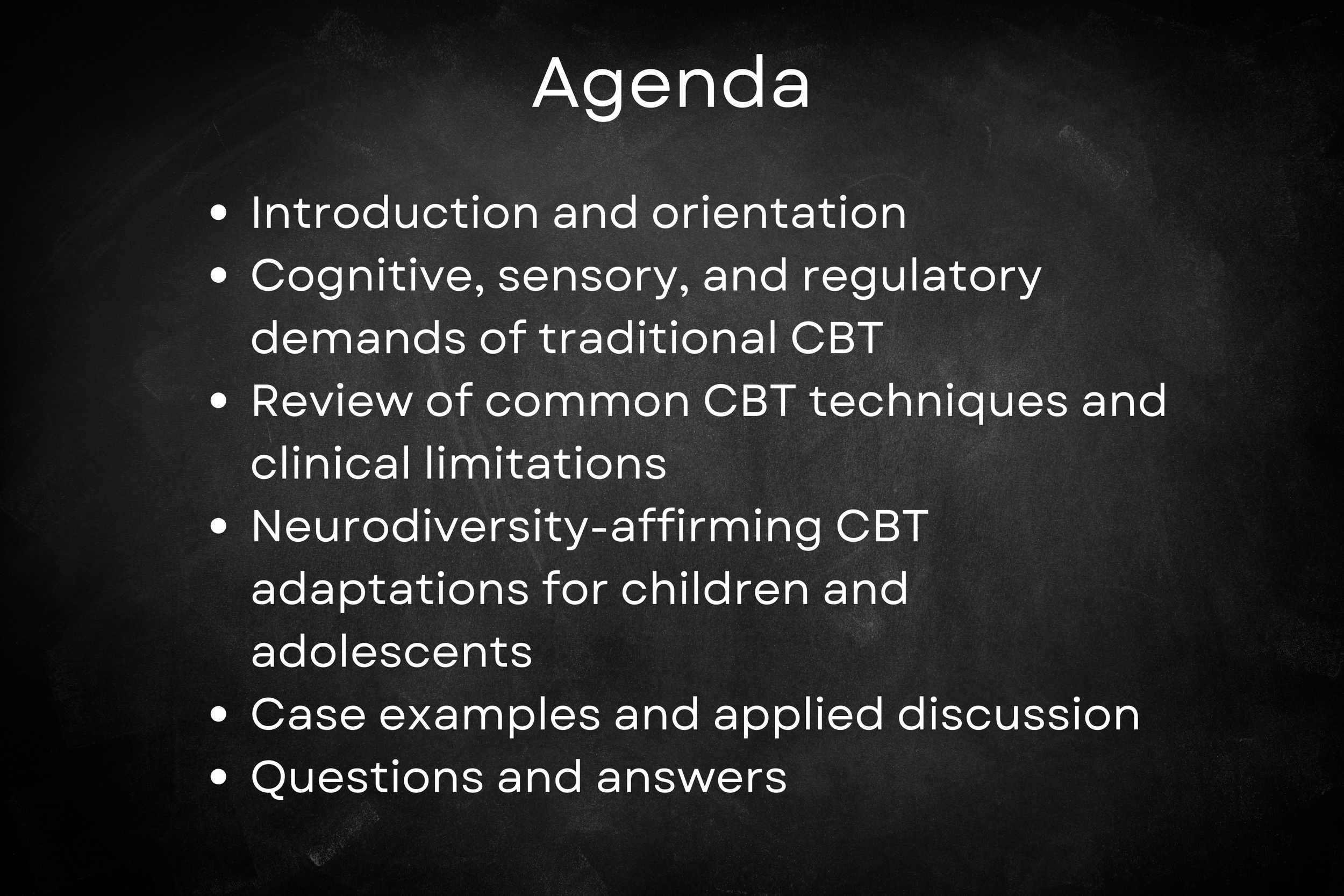
Although Cognitive-Behavioral Therapy (CBT) is widely considered an evidence-based approach, it is often experienced as ineffective or invalidating by neurodivergent clients. This training invites clinicians to critically examine how CBT assumptions about insight, language, attention span, abstract thinking, and self-regulation may not align with autistic and ADHD ways of thinking and processing.
Participants will explore neurodiversity-affirming adaptations to CBT that prioritize nervous system safety, regulation, and relational engagement. Using case studies and practical demonstrations, the training highlights concrete strategies such as visual frameworks, games, stories, and flexible session sequencing to support neurodivergent pediatric clients in developing emotional understanding and coping skills without relying on compliance-based or top-down approaches.
What You’ll Learn
Identify the cognitive, language, sensory, and self-regulation demands inherent in traditional CBT and assess how these demands may create barriers for autistic and ADHD pediatric clients.
Analyze commonly used CBT techniques to evaluate their appropriateness, effectiveness, and limitations when applied with neurodivergent children and adolescents.
Apply neurodiversity-affirming adaptations to CBT by translating core concepts into developmentally appropriate therapy goals.
Who Should Attend
This program is designed for psychologists, professional counselors, clinical social workers, marriage and family therapists, and graduate-level clinicians who provide therapy or assessment services to neurodivergent children and adolescents.
The content included in this training is provided at an Intermediate to Advanced level. A solid understanding of general traits of neurodivergent children and teens and basic tenets of neurodiversity-affirming therapy and cognitive-behavioral therapy are required to fully benefit from this training.
Early Bird Bonus!!
Register by January 17 for complimentary access to:
Foundations of Neurodiversity-Affirming Therapy
Self-Study Course (1.0 CE hour; $45 value)
About the Presenter
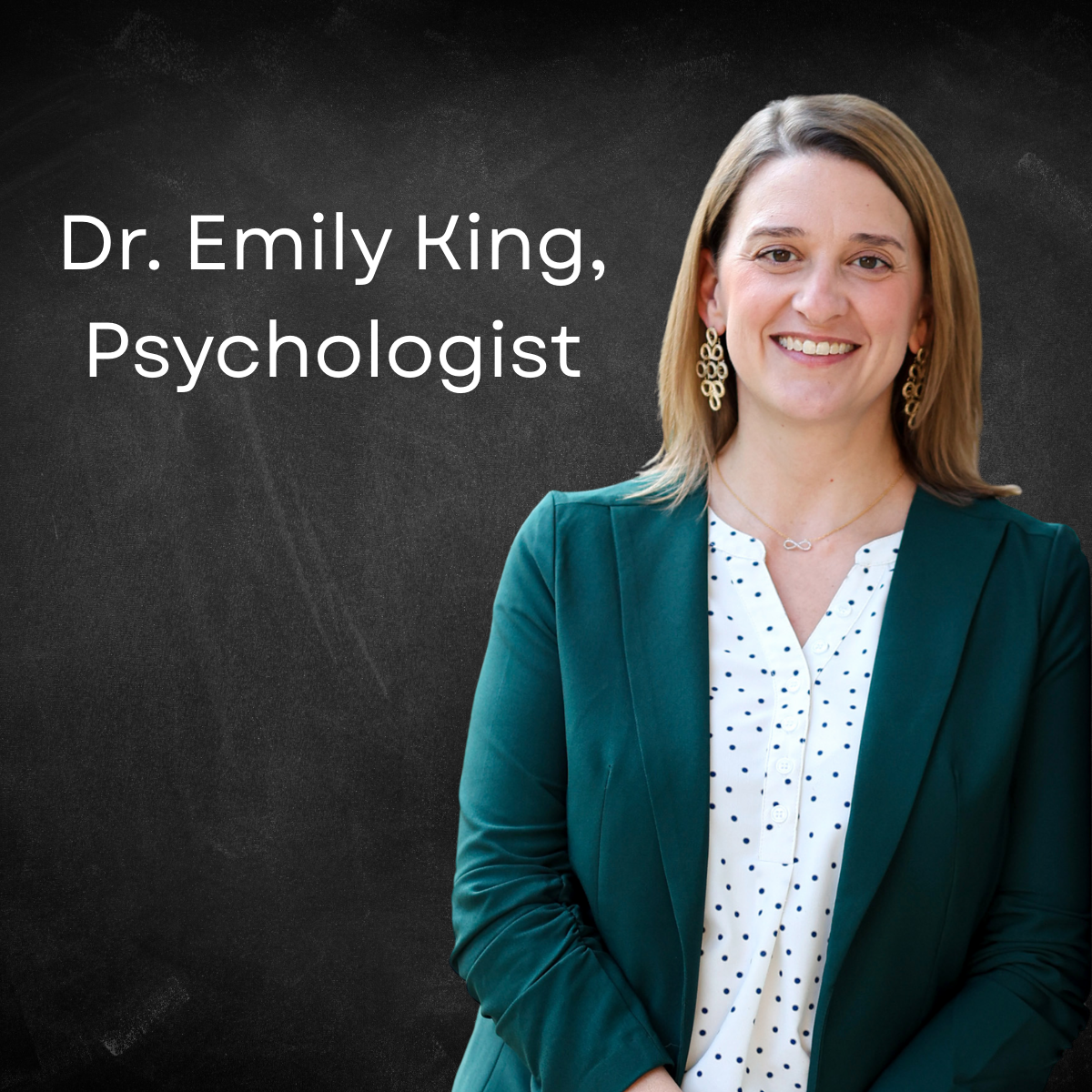
Dr. Emily King, Ph.D.
Dr. Emily King is a child psychologist and former school psychologist with over 20 years of experience supporting neurodivergent children, families, and educators. She earned her Ph.D. in School Psychology from the University of North Carolina at Chapel Hill, where she worked with the Frank Porter Graham Child Development Institute and the Carolina Institute for Developmental Disabilities.
Dr. King is the creator of The Neurodiverse Classroom® professional development curriculum and the host of Learn with Dr. Emily. Her work focuses on practical, neurodiversity-affirming approaches that bridge research and real-world clinical application.
Continuing Education Information
Participants who attend the full program and complete the required quiz will receive a certificate verifying the completion of 1.5 continuing education hours.
Psychologists
Neurodiversity Alliance is approved by the American Psychological Association to sponsor continuing education for psychologists. Neurodiversity Alliance maintains responsibility for this program and its content.
Counselors
Neurodiversity Alliance is an NBCC-Approved Continuing Education Provider (ACEP #7510). This program meets NBCC requirements for continuing education credit.
Continuing education requirements vary by state, licensing board, and professional designation. While this program is approved for APA and NBCC continuing education credit, many state licensing boards and professional organizations (including those regulating LMFTs, LCSWs, and other allied mental health professionals) accept APA-approved or NBCC-approved continuing education toward license renewal.
Participants are encouraged to review their individual state board or professional association requirements to determine whether this program meets their renewal criteria. If you are unsure whether APA or NBCC continuing education is accepted for your license, we recommend confirming with your licensing board prior to registration.
Attendance and Evaluation
Attendance will be verified through live participation monitoring. Participants must attend the entire program to be eligible for CE credit. A post-program evaluation assessing achievement of learning objectives and overall program quality is required. Certificates of completion will be issued electronically following program completion.
Participants unable to attend the live session will be provided access to the recording of the session to complete as a self-study/home study training.
Fees, Cancellations, and Refunds
Registration fees, cancellation deadlines, and refund eligibility are provided prior to registration.
In-person events: Refund requests may be submitted up to seven (7) days before the scheduled program.
Virtual events: Refund requests may be submitted up to two (2) days prior to the event start time.
Refund requests must be submitted through the original registration platform. Transaction or processing fees charged by third-party platforms are nonrefundable. For more information about cancellation policies, please review our Continuing Education Policies document.
Accessibility
Neurodiversity University® is committed to providing accessible continuing education programming. Standard accessibility supports for live and online programs include access to presentation slides in advance when available, closed captioning and live transcription through Zoom or the learning management system, and platform-based participation features appropriate to the program format.
Participants may request additional accommodations in advance. Requests should be directed to Hannah Haedike-Swift, CE Program Coordinator
Financial Disclosures
The presenter receives income from authored works and subscription-based educational content related to neurodivergent learning, including royalties from The Neurodivergent Learner (forthcoming, 2026) and paid Substack subscriptions. These relationships have been reviewed and are not considered to constitute a conflict of interest for this program
Questions
For registration, accessibility, or CE credit inquiries, contact Hannah Haedike-Swift, CE Program Coordinator.
For more information about Neurodiversity University® and Neurodiversity Alliance, please access our Continuing Edcuation Policies.