Neurodivergence Changes the Clinical Picture
LIVE IN BOULDER · MONDAY, OCTOBER 12
Two in-person CE workshops with Emily Kircher-Morris, LPC.
3 CE credits each, or 6 for the full day.
APA approved · NBCC ACEP No. 7510 · Mackintosh Academy
$165 per workshop · $299 full day
Registration closes Wednesday, October 7 · 45 seats per session
In-person CE workshops in Boulder for psychologists and mental health clinicians
Continuing Education Information
APA: Neurodiversity Alliance is approved by the American Psychological Association to sponsor continuing education for psychologists. Neurodiversity Alliance maintains responsibility for this program and its content.
NBCC: Neurodiversity Alliance has been approved by NBCC as an Approved Continuing Education Provider, ACEP No. 7510. Programs that do not qualify for NBCC credit are clearly identified. Neurodiversity Alliance is solely responsible for all aspects of the programs.

SESSION 1 | 9:00 AM–12:00 PM | Introductory | 3 CE credits | $165Neurodiversity-Affirming Clinical Practice: Foundations for Understanding Mental Health, Risk, and Suicidality
For clinicians who want a stronger foundation for understanding how neurotype, environment, communication, masking, sensory processing, and regulation can influence mental health presentation and suicide risk.

SESSION 2 | 1:00–4:00 PM | Intermediate | 3 CE credits | $165When Autism Is Easy to Miss: Differential Diagnosis and Neurotype-Informed Treatment
For clinicians ready to go deeper into nuanced autism presentations, overlapping diagnoses, underlying clinical drivers, and ways to adapt established interventions without losing the therapeutic goal.
Monday, October 12, 2026
Mackintosh Academy, Boulder, Colorado
Morning: 9:00 AM–12:00 PM | Afternoon: 1:00–4:00 PM
$165 per workshop | $299 for both | 3 CE credits each
Morning Workshop:
Neurodiversity-Affirming Clinical Practice: Foundations for Understanding Mental Health, Risk, and Suicidality
Neurodivergent clients may experience and communicate distress in ways that do not fit neuronormative assumptions. Sensory overload, executive-functioning demands, masking, social exclusion, rejection experiences, communication differences, and environmental mismatch can all shape the clinical picture.
This introductory workshop helps clinicians incorporate those factors into case conceptualization rather than treating neurodivergence as an incidental diagnosis. Particular attention will be given to suicidality and non-suicidal self-injury, including factors that may increase vulnerability or complicate traditional approaches to assessment.
What we will focus on
What neurodiversity-affirming practice changes in clinical care
Sensory, cognitive, regulatory, social, and environmental contributors to distress
Masking, social exclusion, rejection, and the cost of appearing “fine”
Suicidal ideation, suicidal behavior, and non-suicidal self-injury
How communication and processing differences can affect risk assessment
Neurodiversity-informed adaptations to clinical communication and collaborative safety planning
Case examples and interactive discussion to support clinical application
Learning Objectives
Describe core principles of neurodiversity-affirming clinical practice and their implications for case conceptualization and treatment planning.
Identify cognitive, sensory, regulatory, social, and environmental factors that may contribute to mental health distress in neurodivergent clients.
Differentiate suicidal ideation, suicidal behavior, and non-suicidal self-injury while considering functions and risk factors particularly relevant to neurodivergent clients.
Apply neurodiversity-informed adaptations to clinical communication, suicide risk assessment, and collaborative safety planning.
Designed for: Psychologists and other mental health clinicians with varying levels of familiarity with neurodiversity-affirming practice. This is an introductory-level program.
Afternoon Workshop:
When Autism Is Easy to Miss: Differential Diagnosis, Case Conceptualization, and Neurotype-Informed Treatment
Autism does not always look the way clinicians were originally trained to recognize it. Autistic people may be verbally sophisticated, capable, socially motivated, emotionally insightful, or highly skilled at masking differences. Their concerns may instead be attributed to anxiety, ADHD, trauma, obsessive-compulsive symptoms, behavioral difficulties, or other presentations.
Recognition is only the first step. Treatment can still miss the mark when neurotype is treated as incidental rather than incorporated into case formulation and intervention planning.
What we will focus on
Nuanced autistic presentations that may be easy to overlook
Masking and camouflaging
Differential reasoning across autism, ADHD, generalized anxiety, social anxiety, OCD, trauma, giftedness, and social (pragmatic) communication disorder
Developmental history, context, persistence across settings, and underlying clinical drivers
Why the same observable behavior can reflect very different processes
Neurotype-informed case conceptualization
Adaptations to CBT, exposure-based interventions, DBT-informed emotion-regulation strategies, ERP, communication, sensory supports, and session structure
Evaluating goals according to distress, functioning, agency, and meaningful participation rather than conformity
Learning Objectives
Differentiate nuanced autistic presentations from overlapping or co-occurring ADHD, anxiety, trauma, OCD, social communication, and gifted presentations using developmental history, context, and underlying clinical drivers.
Analyze cognitive, sensory, regulatory, and environmental factors when developing neurotype-informed case formulations for autistic youth.
Modify evidence-based clinical interventions to increase accessibility and treatment fit for autistic clients while preserving the intended therapeutic goal.
Evaluate clinical goals and intervention outcomes according to distress, functioning, agency, and meaningful participation rather than conformity to neuronormative behavior.
Designed for: Psychologists and other mental health clinicians with foundational knowledge of common mental health diagnoses and basic clinical assessment/intervention skills. This is an intermediate-level program. Attendance at the morning workshop is not a prerequisite.
Make it a full day
The two workshops are designed to stand alone and also to build naturally across the day. Begin with the broader clinical lens of neurodiversity, mental health, distress, and risk. Then move into the more nuanced work of autism recognition, differential diagnosis, case formulation, and treatment adaptation.
Meet Your Presenter: Emily Kircher-Morris, M.A., M.Ed., LPC
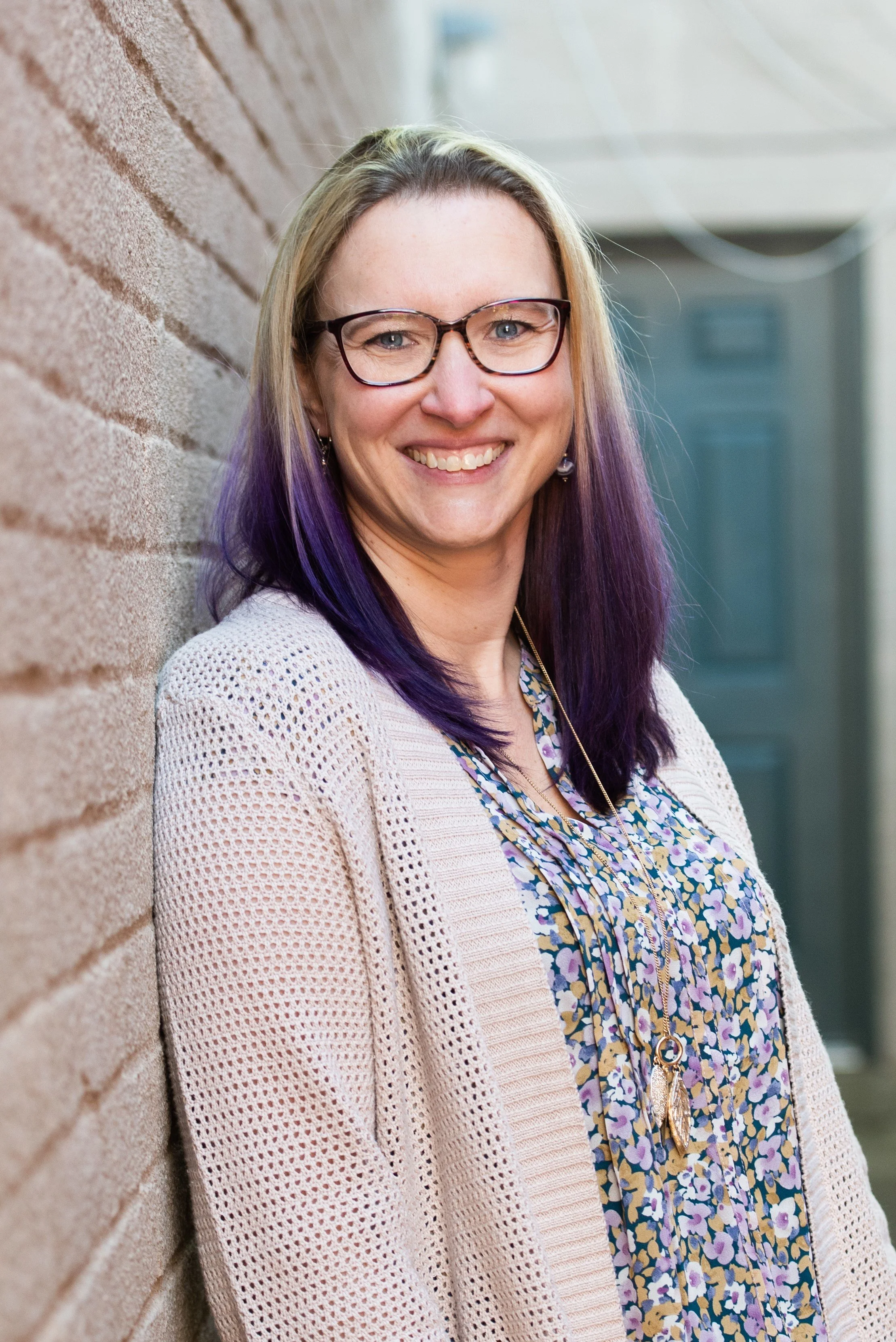
Emily Kircher-Morris is a licensed professional counselor, host of The Neurodiversity Podcast, and co-author of Neurodiversity-Affirming Schools: Transforming Practices So All Students Feel Accepted and Supported.
Her work focuses on translating neurodiversity-affirming principles into practical approaches for clinicians, educators, and other professionals supporting neurodivergent people.
Frequently Asked Questions
-
No. Each workshop is a standalone CE program. You may register for either session individually, or attend both for the discounted full-day rate of $299.
-
No. The afternoon program is intermediate and assumes foundational knowledge of common mental health diagnoses and basic clinical assessment/intervention skills, but the morning workshop is not a prerequisite.
-
Each workshop offers 3 CE credits. Participants who attend both workshops in full may earn 6 CE credits.
-
The programs are designed for psychologists and other mental health clinicians. The morning workshop is introductory; the afternoon workshop is intermediate.
-
Yes. The sessions incorporate case examples, clinical application, and opportunities for discussion.
-
Refunds for live, in-person events are granted up to 7 days prior to the event. For refund requests, please contact us at hannah@neurodiversitypodcast.com to initiate a refund process.
-
We can provide closed captioning (for virtual events), advance materials, modified formatting, and other accommodations. Please email us at hannah@neurodiversitypodcast.com at least 48 hours before live events.
-
Email us at hannah@neurodiversitypodcast.com with any questions.
If you have a question, we acknowledge all complaints within 3 business days and provide written responses within 15 business days. Hannah Haedike-Swift serves as our grievance coordinator for objective handling of formal complaints.